Nanaimo, British Columbia · Home pricing
How Nanaimo house pricing works
A useful pricing analysis explains which recent sales are comparable, which are not, and how your home's condition and current competition affect a proposed sale range. Asking prices show competition; verified sales provide transaction evidence. You and your agent then choose an initial listing strategy.
By Alvin Tan, REALTOR® · Alvin Tan Personal Real Estate Corporation · eXp Realty
Guidance checked 12 November 2026
Sellers Also Asked
Can I use a neighbour's asking price?
Use it to understand competition, not as proof of a completed sale. Check the home's features, status and date before relying on it.
Does price per square foot settle it?
No. It can hide differences in land, layout, condition and usable space. Consistent measurements and relevant comparisons matter.
Is the asking price a promise?
No. It is the price presented to buyers. A supported sale range still carries uncertainty, and the final result depends on the transaction.
Start with the right comparables
A comparison is useful because of the evidence behind it, not because the address is nearby or the sale was memorable. Start with a clear description of the home being priced, then ask why each sale belongs in the analysis.
- Property type and tenure: compare genuinely similar homes. A detached freehold house is not interchangeable with a strata townhouse or a different ownership arrangement.
- Location: consider the buyer's alternatives, access, surroundings and site characteristics. A Nanaimo-wide label alone does not make two locations equivalent.
- Timing: record the sale date and what that date represents. Explain any gap between the evidence date and today's pricing discussion.
- Condition and function: verify size, layout, age, updates, parking and other material features rather than relying on photographs alone.
BC Assessment's explanation of market value describes the importance of property characteristics, location and recent similar sales. A current listing strategy still needs evidence relevant to the date and property in question.
Outliers and small samples
Do not quietly discard a sale because it does not support a preferred price. Explain exclusions, unusual circumstances and weaker matches. If the available sample is small, say so. Expanding the search can help, but it also introduces differences that need to be acknowledged.
Compare condition and location
Two homes can have the same bedroom count and still offer a different experience. Layout, usable space, maintenance, finish, site access and setting can matter to buyers in different ways. Record what is confirmed and what is only assumed.
Ask for support, not a formula
For an adjustment, ask: what difference are we accounting for, which direction does it point, and what supports the amount? A renovation invoice does not establish the same increase in resale value. Avoid counting a feature twice through overlapping adjustments.
The BC Property Assessment Appeal Board's comparison guide explains qualitative and dollar adjustments and the need to explain them. It is an assessment-appeal resource; its valuation date is not the date to use automatically for a current sale.

Read active competition
A buyer compares your home with the alternatives available at that moment. Active listings can help you understand that choice, but their asking prices are proposals, not confirmed sale outcomes.
Verified sales
Record the transaction evidence, its date and the features that make the sale relevant. Verify the status instead of assuming every “sold” reference means the same thing.
Active listings
Record the current ask, date checked and how the home competes with yours. Keep this information separate from completed-sale evidence.
Pending or other statuses
Clarify what is confirmed, which terms are known and what remains uncertain. Do not treat an unverified price as a completed result.
For wider context, see the Nanaimo market review. A market-wide statistic is context, not a property-specific valuation.
Choose an asking-price strategy
First discuss a range supported by the evidence and its limitations. Then discuss the asking price in relation to your goals, competing homes and the way buyers will encounter the listing. These are related decisions, but they are not the same number by definition.
- Reconcile the evidence: explain which comparables deserve more weight and why. Do not rely on an unexplained average.
- Test the proposal: how will your home compare with alternatives at the proposed ask? What assumptions could change the view?
- Agree on a review: identify a date and useful evidence, such as new sales or changes in competition. Avoid making a later change automatic.
Looking at your assessment instead? Read BC Assessment versus market value. If the property is already listed, the separate guide to when to adjust your asking price addresses that later decision.
A Nanaimo pricing example: from expired listing to a sale
A Nanaimo home had been listed with another agent, but the listing expired without a sale. The sellers then engaged Alvin to review their next steps.
Alvin and the sellers reviewed comparable sales and accounted for differences in the homes' features. The sellers chose an asking price guided by that analysis. The home sold for 100% of that asking price within a short time.
The takeaway: a pricing discussion should connect the asking price to relevant sales and explain the differences between properties, rather than rely on an unsupported number.
An anonymized client example supplied by Alvin. The address, dates, dollar amounts and exact time to sell are not disclosed. This is one property's outcome, not proof that pricing alone caused the sale or a guarantee of a similar result.
Make every comparison explain its place
The worksheet gives your pricing conversation a record: why a sale was selected, how it differs and what needs checking. The table below describes the method. It is not a report of actual Nanaimo sales or a set of preset dollar adjustments.
| Decision | Record in your worksheet | Question to resolve |
|---|---|---|
| Include a strong match | Verified sale, date, source and relevant similarities | Why is this evidence useful for this home and this pricing date? |
| Keep a weaker match with less weight | Material differences and the limits they create | What can this sale reasonably tell us, and what can it not? |
| Exclude an unsuitable comparison | The specific reason, not just its inconvenient price | Is the location, property type, status or other feature too different? |
| Consider an adjustment | Difference, direction, amount if supported, and evidence | Are we using market support rather than a rule of thumb? |
| State the remaining uncertainty | Missing facts, dated evidence and next checks | Would new information materially change the proposed range? |
Use permitted information and redacted references if sharing. No addresses, sold prices or adjustment amounts have been invented for this guide.
Questions Nanaimo sellers ask about pricing
How are comparable sales used to set a Nanaimo home's asking price?
An agent selects relevant sales, verifies their dates and features, explains important differences, and weighs the strongest evidence to discuss a likely sale range. Current competition and your selling goals then inform the initial asking price. The result is a reasoned strategy, not a guaranteed sale price.
What makes a sale a useful comparable?
Look for a similar property type and tenure, a relevant location, comparable size and condition, and a sale date close enough to reflect the market being considered. A nearby home can still be a poor comparable if its land, view, layout or other material features differ.
Should I use active asking prices or sold prices?
Use both for different jobs. Verified sales show transaction evidence. Active listings show the options buyers can choose today, but an asking price does not prove what a buyer will pay. Keep their statuses and dates separate in your analysis.
Is price per square foot enough to price my house?
No. It can be a comparison aid when measurements and property types are consistent, but it does not isolate the value of land, condition, layout, views or other differences. Confirm how finished and unfinished space were measured before comparing ratios.
What if there are very few similar sales?
Explain the limited sample. You may need to expand the time period or search area and account for the resulting differences. Do not quietly treat a different market or property type as equivalent. An unusual property may warrant a professional appraisal.
How should renovations affect the asking price?
Document the work, its condition, permits where applicable and what comparable buyers appear to value. Money spent is not automatically money recovered. Avoid assigning a fixed premium without support from relevant market evidence.
How are pricing adjustments supported?
For each proposed adjustment, ask which difference it addresses, why it affects value and what evidence supports its direction and amount. If the evidence does not support a precise dollar figure, explain the uncertainty rather than inventing precision.
Does BC Assessment show my current selling price?
Not necessarily. BC Assessment values reflect July 1 of the preceding year, while a current pricing discussion considers a different date and current evidence. Verify property details in the assessment, but do not automatically use its value as the asking price.
What is the difference between an asking price and a sale range?
The asking price is the amount offered to the market. A supported sale range expresses an assessment of possible value based on the available evidence and assumptions. Negotiations, terms, buyer demand and changes in competition can affect the eventual result.
Should I start high so I have room to negotiate?
That is a strategy to examine, not a default rule. Compare the proposal with the supported range and the alternatives buyers will see. Discuss the risks of missing relevant searches or appearing poor value, without assuming a particular number of days or price reduction will follow.
When should we review the initial price?
Agree on a review date and the evidence you will consider: new sales, changes in competing listings, showing feedback and the quality of enquiries. A later price-change decision belongs to a separate review; it should not be an automatic reaction to one quiet day.
What should I bring to a Nanaimo home evaluation?
Bring your property information, recent improvements and relevant documentation, known issues, your timing goals and any sales you want to discuss. The worksheet helps record the sources, dates and questions. Alvin can help organize the pricing discussion; a formal appraisal is a separate service.
Client perspectives on the selling process
These are individual client experiences, not evidence of a particular valuation method, an audited result or a promise about your sale. Property types, prices and dates are not inferred.
“From start to finish, your expertise, market knowledge, and strategic approach made the entire process smooth and stress-free.”
Robert Hu · Home seller
Read the original review“they helped us sold my house just under 2 months with a very good prices.”
Nana lum · House seller
Read the original review“Alvin provided great service as we approached listing and then listed on Monday, showed on Tuesday and sold on Wednesday!”
Gary Anderson · Seller
Read the original reviewRequest a property evaluation
Bring your questions, property details and the comparisons you want to discuss. Alvin can help organize the evidence and the initial listing strategy for your Nanaimo home.
Learn more about the Nanaimo home evaluation process.
Sources and scope
- BC Assessment: Market value and property assessment - property characteristics and assessment valuation dates.
- BC Property Assessment Appeal Board: Preparing submissions on market value - comparison, explanation and adjustment principles, in an assessment-appeal context.
- Appraisal Institute of Canada: What appraisers do - formal appraisal roles and comparison methods.
Sources checked 12 November 2026. This is general educational guidance for single-family resale sellers, not a formal appraisal or a guarantee of sale price. A qualified appraiser can address assignments requiring an independent appraisal.
Nanaimo, British Columbia
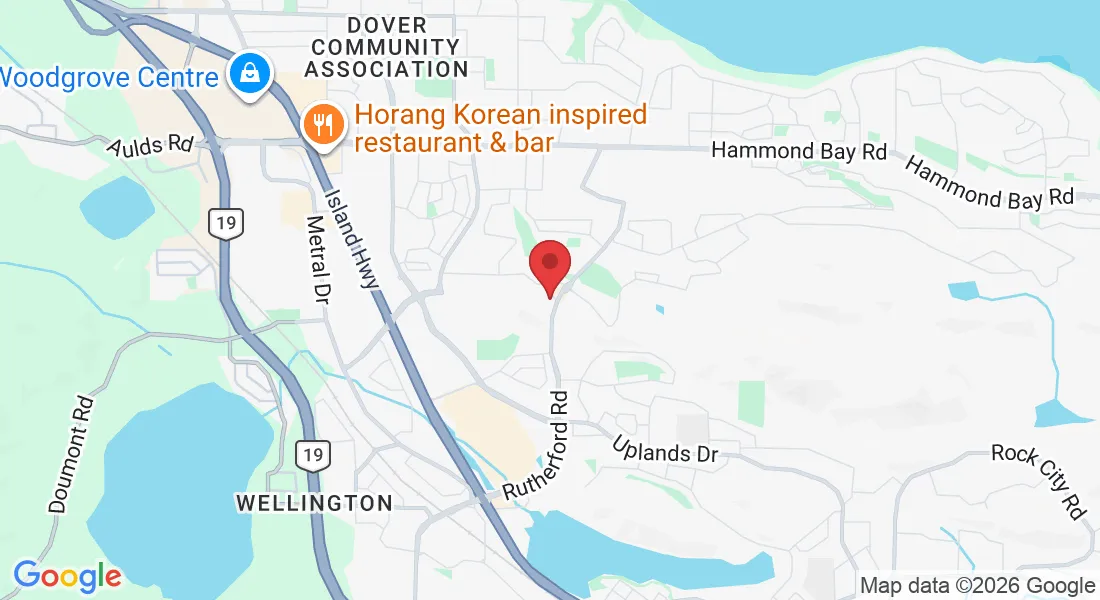
City boundary context only. A city map does not establish that two properties are comparable. The Nanaimo Art Gallery image above is a local landmark, not a property being valued.